

Home > Lectures > The Torridon Group, planetary field analogues, and the search for life on Mars
The Torridon Group, planetary field analogues, and the search for life on Mars

This is a free public lecture open to members and non members.
Summary
Mars is thought to have been habitable early throughout its history (> 3 billion years ago), when it sustained an atmosphere and stable bodies of liquid water at its surface. Although the surface of Mars is now entirely inhospitable, traces of a putative biosphere may be archived within its sedimentary rock record. The potential of finding fossilised traces of life on Mars has been the driving force behind its exploration for several decades, and continues with the NASA Curiosity and Perseverance rovers, which are currently exploring Gale and Jezero craters. A recent discovery by Perseverance of organic matter associated with reduced mineral phases in the Neretva Vallis river channel has stimulated new interest in the possibility of a Martian biosphere, and these materials have been sampled for eventual return to Earth.
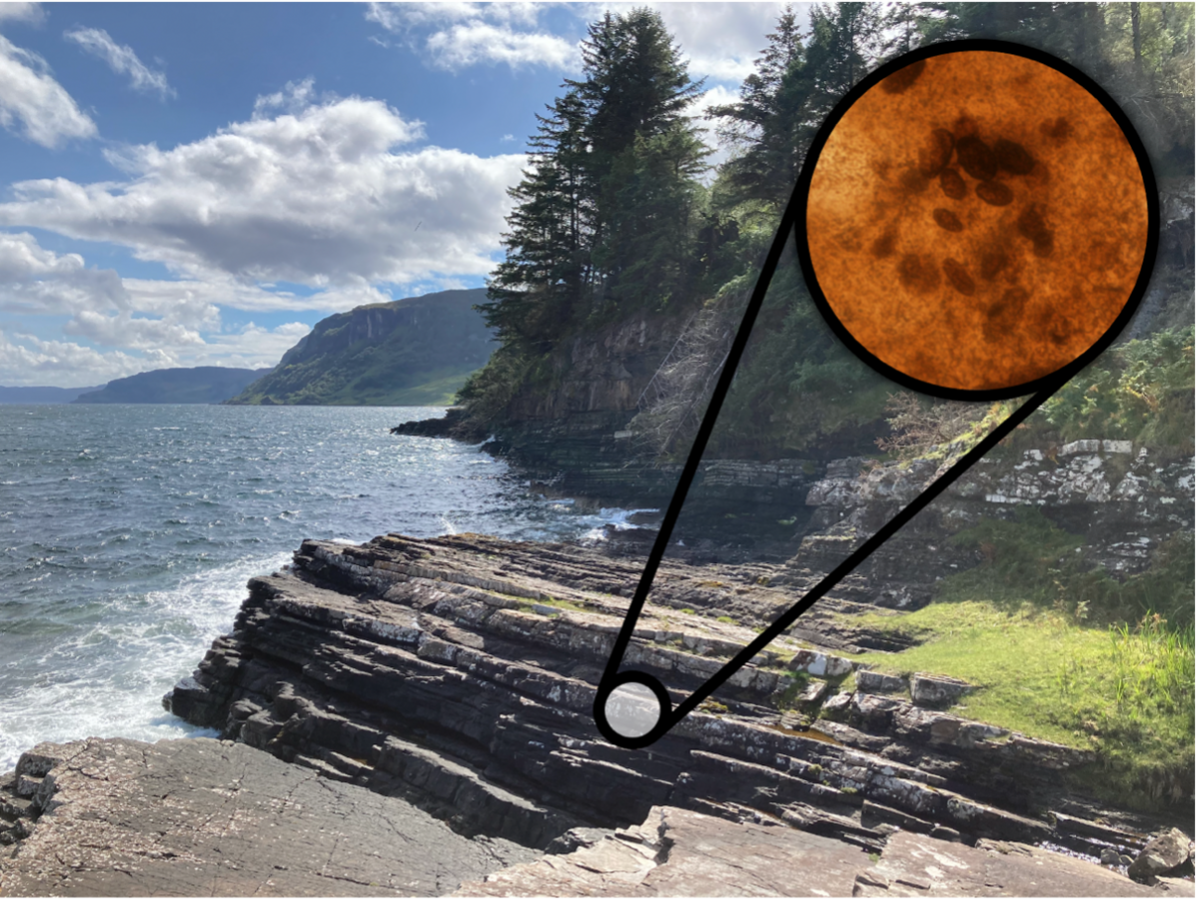
Until we achieve Mars Sample Return, developing hypotheses about Mars’ early habitable history requires us to harness understanding of similar localities here on Earth; we term such setting ‘planetary field analogues’. In this talk, I will discuss the importance of planetary field analogues for understanding ancient Martian environments, and consider how exceptionally well-preserved fossiliferous sedimentary rocks from the Torridon Group of NW Scotland provide insights into potential habitable environments on early Mars and the types of biosignatures for which we might search following the sophisticated laboratory analysis of Martian samples brought to Earth in the future.
Biography
Dr Keyron Hickman-Lewis, School of Natural Sciences, Birbeck, University of London
Keyron has been a Research Assistant (2019–2020) , CNRS Orléans (France) and Università di Bologna (Italy)
Aurora Research Fellow (2021–2024), Natural History Museum, London
Research Fellow (2024–2024) , Imperial College London
and from 2024 a Lecturer in Planetary Exploration, Birkbeck, University of London
His research interests are
Co-evolution of Earth and Life in the Precambrian: can we constrain the emergence of major microbial metabolisms throughout the Precambrian and their relationship with changing sedimentary environments and ocean chemistry?
Modern analogues of ancient ecosystems: How can we use extreme planetary field analogues most effectively to explain geological and ecological aspects of environments on the early Earth and Mars?
Technique development: How can we harness non-traditional and emerging instrumentation and data treatment (e.g. chemometrics) to shed new light on the ancient fossil record?
Planetary exploration: How can we effectively utilise space mission observations, including rover and orbiter datasets, to reconstruct past environments and habitability throughout the Solar System?